

Obama approval thread
Moderator: Community Team
Forum rules
Please read the Community Guidelines before posting.
Please read the Community Guidelines before posting.
-
bradleybadly

- Posts: 133
- Joined: Sat Dec 01, 2007 11:53 pm
- Location: Yes
Obama approval thread
How much do you approve or disapprove of President Obama's job performance so far?
Lootifer wrote:I earn well above average income for my area, i'm educated and I support left wing politics.
jbrettlip wrote:You live in New Zealand. We will call you when we need to make another Hobbit movie.
-
Phatscotty

- Posts: 3693
- Joined: Mon Dec 10, 2007 5:50 pm
- Gender: Male
Re: Obama approval thread
Still waiting for him to do something to judge him on
However, here is a professional poll as of yesterday
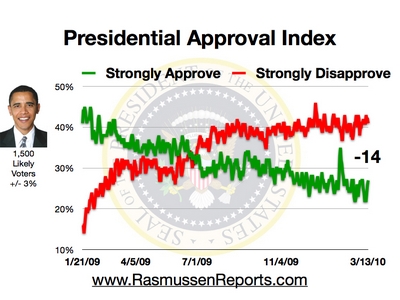

However, here is a professional poll as of yesterday
-
edocsil

- Posts: 102
- Joined: Sat Apr 28, 2007 8:09 am
- Gender: Male
- Location: The Great State Of Minnesota
Re: Obama approval thread
Slightly approve, I don't really care for his opinions on healthcare or NASA, but he seems to be a bit more honest then most politicians and that counts for a lot in my book.
Edoc'sil
Commander9 wrote:Trust Edoc, as I know he's VERY good.
zimmah wrote:Mind like a brick.
-
fiestadelimon

- Posts: 16
- Joined: Sat Mar 13, 2010 9:32 pm
Re: Obama approval thread
He's done about as much as he can from the executive role..
It's Congress that is the problem.
It's Congress that is the problem.
-
bradleybadly
- Posts: 133
- Joined: Sat Dec 01, 2007 11:53 pm
- Location: Yes
Re: Obama approval thread
He has done something. As far as I know, he's responsible for ordering drone attacks which have killed some Taliban leaders and terrorists. Remember those Somali pirates that he had shot too?Phatscotty wrote:Still waiting for him to do something to judge him on
Lootifer wrote:I earn well above average income for my area, i'm educated and I support left wing politics.
jbrettlip wrote:You live in New Zealand. We will call you when we need to make another Hobbit movie.
-
fiestadelimon
- Posts: 16
- Joined: Sat Mar 13, 2010 9:32 pm
Re: Obama approval thread
word is that this morning he stunk up the bathroom.
-
Trephining

- Posts: 54
- Joined: Mon Oct 19, 2009 7:04 pm
Re: Obama approval thread
Let's see:
auto bailout
bank bailout
supported TARP
supported stimulus
nowhere near closing Gitmo
how many troops still in Iraq and/or Afghanistan?
stomped on creditor rights in auto bailout
largest deficit spending ever
supports healthcare reform bills that increase cost, increase taxes, and destroy incentives to employ people
done nothing to reverse Patriot Act
czar x3000
etc bad etc
On the good side:
deemphasized DEA pursuit of marijuana dispensaries
made travel to Cuba slightly less cumbersome
Overall this administration and POTUS are a big steaming pile of crap.
auto bailout
bank bailout
supported TARP
supported stimulus
nowhere near closing Gitmo
how many troops still in Iraq and/or Afghanistan?
stomped on creditor rights in auto bailout
largest deficit spending ever
supports healthcare reform bills that increase cost, increase taxes, and destroy incentives to employ people
done nothing to reverse Patriot Act
czar x3000
etc bad etc
On the good side:
deemphasized DEA pursuit of marijuana dispensaries
made travel to Cuba slightly less cumbersome
Overall this administration and POTUS are a big steaming pile of crap.
-
SultanOfSurreal

- Posts: 97
- Joined: Thu Jul 03, 2008 3:53 am
- Gender: Male
Re: Obama approval thread
i already know what you're going to say about this, but i'm going to allow you the chance to articulate a position before i tear you a new one. so: what don't you like about the president's position on NASA?edocsil wrote:Slightly approve, I don't really care for his opinions on healthcare or NASA, but he seems to be a bit more honest then most politicians and that counts for a lot in my book.

Re: Obama approval thread
I didn't vote for the guy, but I thought "how much harm can he do?" Apparently alot. Not only the horrifying amount of money he's spending, its like he's trying to get congress and senate to not do their jobs. He pushes them to just vote on the healthcare thing, and not think about or read it. Its a good thing that alot of them aren't letting him bully them around too much. I think he's kind of gotten himself stuck in a corner. He's put so much of his and everyone elses time into this healthcare bill, that he feels he just has to get it passed no matter what, even though most Americans are against it now. The democrats are getting bribed to go along with it, and the republicans are just being accused of being stuborn. Its like he thinks that no one can possibly legitimately disagree with the bill.
progress means getting nearer to the place where you want to be...If you are on the wrong road, progress means doing an about-turn and walking back to the right road; in that case the man who turns back soonest is the most progressive man.
~C. S. Lewis
-
BigBallinStalin

- Posts: 5071
- Joined: Sun Oct 26, 2008 10:23 pm
- Location: crying into the dregs of an empty bottle of own-brand scotch on the toilet having a dump in Dagenham
- Contact:
Re: Obama approval thread
Big deal. Any president who had any real chance of getting elected would have done the same.bradleybadly wrote:He has done something. As far as I know, he's responsible for ordering drone attacks which have killed some Taliban leaders and terrorists. Remember those Somali pirates that he had shot too?Phatscotty wrote:Still waiting for him to do something to judge him on
Re: Obama approval thread
I did not vote for him and I was sure I would not like most of his policies. However, when he was elected I thought it would do a lot of good in helping minorities realize that if they work hard and apply themselves they could achieve anything. There was no affirmative action in this election. People voted and chose him.
So I figured I'd give him a chance and how bad could it be.... holy fucking batshit insane spending and expansion of social programs! I'm a micro government guy. I strongly disapprove of anyone who expands government this much.
So I figured I'd give him a chance and how bad could it be.... holy fucking batshit insane spending and expansion of social programs! I'm a micro government guy. I strongly disapprove of anyone who expands government this much.

Re: Obama approval thread
SO you wanted the world to enter a 30-year depression?Trephining wrote:Let's see:
auto bailout
bank bailout
supported TARP
supported stimulus
nowhere near closing Gitmo
how many troops still in Iraq and/or Afghanistan?
stomped on creditor rights in auto bailout
largest deficit spending ever
supports healthcare reform bills that increase cost, increase taxes, and destroy incentives to employ people
done nothing to reverse Patriot Act
czar x3000
etc bad etc
On the good side:
deemphasized DEA pursuit of marijuana dispensaries
made travel to Cuba slightly less cumbersome
Overall this administration and POTUS are a big steaming pile of crap.
He consulted the experts in the matter.
Obama is fine, he has to fix what Bush did.
el cartoncito mas triste del mundo
-
edocsil
- Posts: 102
- Joined: Sat Apr 28, 2007 8:09 am
- Gender: Male
- Location: The Great State Of Minnesota
Re: Obama approval thread
He slashed NASA's budget, effectively ending the ARES program, as well as several other key projects to put Americans back up in space. We will be using Russian rockets for quite some time to come now.
Edoc'sil
Commander9 wrote:Trust Edoc, as I know he's VERY good.
zimmah wrote:Mind like a brick.
-
bradleybadly
- Posts: 133
- Joined: Sat Dec 01, 2007 11:53 pm
- Location: Yes
Re: Obama approval thread
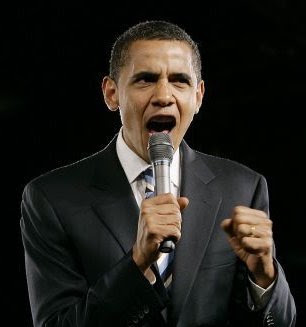
"I WANT THAT DAMN HEALTHCARE BILL PASSED! I DON'T CARE IF THE AMERICAN PEOPLE DON'T WANT IT! I'M GOING TO GET MY F*CKING LEGACY NO MATTER WHAT!"
Lootifer wrote:I earn well above average income for my area, i'm educated and I support left wing politics.
jbrettlip wrote:You live in New Zealand. We will call you when we need to make another Hobbit movie.
-
Phatscotty
- Posts: 3693
- Joined: Mon Dec 10, 2007 5:50 pm
- Gender: Male
Re: Obama approval thread
thats some real panic talk there. business cycle 101, 7-10 years tops. unless there is extensive government interference, then it can be longer.nietzsche wrote:SO you wanted the world to enter a 30-year depression?Trephining wrote:Let's see:
auto bailout
bank bailout
supported TARP
supported stimulus
nowhere near closing Gitmo
how many troops still in Iraq and/or Afghanistan?
stomped on creditor rights in auto bailout
largest deficit spending ever
supports healthcare reform bills that increase cost, increase taxes, and destroy incentives to employ people
done nothing to reverse Patriot Act
czar x3000
etc bad etc
On the good side:
deemphasized DEA pursuit of marijuana dispensaries
made travel to Cuba slightly less cumbersome
Overall this administration and POTUS are a big steaming pile of crap.
He consulted the experts in the matter.
Obama is fine, he has to fix what Bush did.
-
Trephining
- Posts: 54
- Joined: Mon Oct 19, 2009 7:04 pm
Re: Obama approval thread
A depression will come regardless of federal government spending an extra [near trillion dollars] pile of money that we don't currently have. Spending money you don't have does not cure your financial woes.nietzsche wrote: SO you wanted the world to enter a 30-year depression?
He consulted the experts in the matter.
Obama is fine, he has to fix what Bush did.
Follow the money. Where does it go? It winds up aiding bankers. Mortgage restructuring just patches up payments that go to lenders. Nearly the entire country has been hoodwinked by the banking system in this country and propagandized into fear over what would happen if huge amounts of money weren't transferred to the financial elites.
Our central banking system is inflationary by design, and stealing from future generations by deficit spending and borrowing, or simply devaluing the dollar does not prevent any inflation. We are headed for it. Every fiat currency ever has eventually collapsed - it is just a matter of when.

Re: Obama approval thread
Lol, wtf are you talking about?Phatscotty wrote:thats some real panic talk there. business cycle 101, 7-10 years tops. unless there is extensive government interference, then it can be longer.nietzsche wrote: SO you wanted the world to enter a 30-year depression?
He consulted the experts in the matter.
Obama is fine, he has to fix what Bush did.
Look at the Great Depression, Japan in the 90's (and beyond), the great depression in the 1870's and so on. Where the hell did all the "business cycle 101" bs come from?
Government intervention actually reduces the length of recessions as proven many times throughout the global economy, and I would love to see you try to counter this.
Btw Scotty I'm still waiting for your response in the Milton Friedman thread. Like usual you started up really hyper and up for it, 2 posts later you died off after I owned you.
-
Trephining
- Posts: 54
- Joined: Mon Oct 19, 2009 7:04 pm
Re: Obama approval thread
Based on what you type here I am skeptical of any kind of "owning" actually being carried out by you.Titanic wrote:
Lol, wtf are you talking about?
Look at the Great Depression, Japan in the 90's (and beyond), the great depression in the 1870's and so on. Where the hell did all the "business cycle 101" bs come from?
Government intervention actually reduces the length of recessions as proven many times throughout the global economy, and I would love to see you try to counter this.
Btw Scotty I'm still waiting for your response in the Milton Friedman thread. Like usual you started up really hyper and up for it, 2 posts later you died off after I owned you.
You realize that the two lost decades in Japan have come in spite of immense government intervention in the form of low interest rates and massive stimulus spending, correct?
Government intervention does not reduce the length of recessions. It allows for inflationary actions to give the illusion of the recession ending, simply kicking the can down the road. Look at the LTCM bailout in 1999, moving to the tech bubble of 2001, moving to the housing bubble, etc.
I'd love to hear you explain away all the side effects of government intervention that accompany the officially stated intended direct effects.


Re: Obama approval thread
A bizarre argument. Let me translate this into another context for those who don't truly understand why I believe Trephining is wrong.Trephining wrote:Based on what you type here I am skeptical of any kind of "owning" actually being carried out by you.Titanic wrote:
Lol, wtf are you talking about?
Look at the Great Depression, Japan in the 90's (and beyond), the great depression in the 1870's and so on. Where the hell did all the "business cycle 101" bs come from?
Government intervention actually reduces the length of recessions as proven many times throughout the global economy, and I would love to see you try to counter this.
Btw Scotty I'm still waiting for your response in the Milton Friedman thread. Like usual you started up really hyper and up for it, 2 posts later you died off after I owned you.
You realize that the two lost decades in Japan have come in spite of immense government intervention in the form of low interest rates and massive stimulus spending, correct?
Government intervention does not reduce the length of recessions. It allows for inflationary actions to give the illusion of the recession ending, simply kicking the can down the road. Look at the LTCM bailout in 1999, moving to the tech bubble of 2001, moving to the housing bubble, etc.
I'd love to hear you explain away all the side effects of government intervention that accompany the officially stated intended direct effects.
That's right folks, we're going medical.
We are faced with a deeply sick patient. We have, on the basic level, two very simple options. Treat or not treat. Within Treatment we have a range of options. Take a pill a day to 15 hours of surgery. Within non-treatment we have no options- the patient will get better or die.
Trephining argues that doctors treating patients do two things:
1) Make the patient worse
2) Do nothing at all to affect the patient's condition
I can't be sure which he really believes, but let's be fair and say that he thinks treating patients is a bad thing. He has faith in the ability of the body to heal itself.
Now, that's a philosophy we can all get behind. The body can deal with scrapes, cuts, sprains and bruises without treatment in many cases. We're not dealing with a bruise though. We're dealing with cancer. Something that most would accept as being pervasive, and perhaps even incurable. Can we fix every part of the process that led us into this recession? Doubtful- it's everywhere. When dealing with cancer, non-treatment is fatalistic. Doctor intervention will be upsetting for some, but it is better than death.
Trephining suggests that because some doctors have mistreated their patients doctors should not be trusted to deal with patients. This is a grave series of errors (pun intended).
First he suggests that intervention itself caused the harm, rather than the way that the doctor intervened.
Secondly, he assumes that every patient is the same, and that the same method of intervention would affect the patient in the same way.
Thirdly, he suggests that the patient would have been better off without treatment, but offers no evidence for patients in a similar condition doing better without treatment.
Fourthly, he suggests that a cure is ineffective if it just "kicks the can further down the road". Preserving life, even the life of an economy, is still a worthy aim. He argues that death will come anyway, but that is no argument against prolonging life.
Finally then, Trephining seems to suggest that the length of the illness itself is what should be addressed. Is a long illness that is followed by no illnesses better than a mild illness followed by periodic mild illness? In other words- interference might well prolong an illness but prevent illness in the future. Reform may well retard economic growth, but it might be necessary for the improvement of general health. Rebreaking a broken bone, for example, might make recovery longer, but will result in a stronger leg.
-
Trephining
- Posts: 54
- Joined: Mon Oct 19, 2009 7:04 pm
Re: Obama approval thread
Actually, I requested an explanation that doesn't use some elegant yet rather disconnected metaphor, which, while fun to read, doesn't actually explain anything in the topic.
Re: Obama approval thread
And that might be precisely the problem. You may well want something, but you aren't going to get it. I respect your wish that the recession just disappear without government intervention. It's great. It's a child's wish.Trephining wrote:Actually, I requested an explanation that doesn't use some elegant yet rather disconnected metaphor, which, while fun to read, doesn't actually explain anything in the topic.
Unfortunately, we don't get everything we wish for as children. You won't get a perfect solution, and you won't get a perfect response.
I think it's fun that you believe that you have a right to be angry when I fail to adequately fill your "request". And again, the lack of realism comes to the fore. You're expecting something, and you're not going to get it.
Pure fantasy-land thinking.
-
thegreekdog

- Posts: 7246
- Joined: Thu Jul 17, 2008 6:55 am
- Gender: Male
- Location: Philadelphia
Re: Obama approval thread
I think it's suitable to give an educated opinion on his presidency.
Plusses
- His speeches are still well-done.
- I like his ideas, specifically those regarding the economy and balancing the budget.
- I like that he is still prosecuting both wars and doing so successfully (using the last administration's ideas, but I digress).
Minuses
- No follow-through between speeches and action including, but not limited to, job creation, the economy generally, "working" with Republicans.
- No follow-through on campaign promises including, but not limited to, ending the war in Iraq, ending invasions to privacy.
- Various bailouts including, but not limited to, the bailout of banks, the bailout of the auto industry (a/k/a the bailout of the auto unions), and the job creation act which spends upwards of $200K to create one job that pays a fifth of $200K.
Plusses
- His speeches are still well-done.
- I like his ideas, specifically those regarding the economy and balancing the budget.
- I like that he is still prosecuting both wars and doing so successfully (using the last administration's ideas, but I digress).
Minuses
- No follow-through between speeches and action including, but not limited to, job creation, the economy generally, "working" with Republicans.
- No follow-through on campaign promises including, but not limited to, ending the war in Iraq, ending invasions to privacy.
- Various bailouts including, but not limited to, the bailout of banks, the bailout of the auto industry (a/k/a the bailout of the auto unions), and the job creation act which spends upwards of $200K to create one job that pays a fifth of $200K.

-
Trephining
- Posts: 54
- Joined: Mon Oct 19, 2009 7:04 pm
Re: Obama approval thread
You can go ahead and post something with substance when you're ready.Symmetry wrote:And that might be precisely the problem. You may well want something, but you aren't going to get it. I respect your wish that the recession just disappear without government intervention. It's great. It's a child's wish.Trephining wrote:Actually, I requested an explanation that doesn't use some elegant yet rather disconnected metaphor, which, while fun to read, doesn't actually explain anything in the topic.
Unfortunately, we don't get everything we wish for as children. You won't get a perfect solution, and you won't get a perfect response.
I think it's fun that you believe that you have a right to be angry when I fail to adequately fill your "request". And again, the lack of realism comes to the fore. You're expecting something, and you're not going to get it.
Pure fantasy-land thinking.
Re: Obama approval thread
Symmetry actually got it quite spot on, what matters is the quality of government intervention rather then just the size of the intervention itself.
Bush's original TARP bailout would have been useless as there was almost 0% oversight. The response to the post-9/11 recession was awful as there was no post-recession plan. The original Japanese plan to get our of their recession was bad because they did not provide enough safety or impetus to get trust back into the large organisations.
However, proper government intervention like FDR's reaction to the Great Depression of social reform, greater financial restrictions, greater legislative regulations implemented with a huge stimulus boost to industry (via a World War) worked. The stimulus to the economy and motor companies, the safety net guarantees or government purchases of financial institutions and all the other economic actions have helped prevent the recent recession from turning into a depression. Although we now need greater restrictions on financial practices and the size and breadth of financial institutions to prevent a future financial crisis, the current recessions has been countered by government intervention.
If you want more detail, I could easily give it to you.
Bush's original TARP bailout would have been useless as there was almost 0% oversight. The response to the post-9/11 recession was awful as there was no post-recession plan. The original Japanese plan to get our of their recession was bad because they did not provide enough safety or impetus to get trust back into the large organisations.
However, proper government intervention like FDR's reaction to the Great Depression of social reform, greater financial restrictions, greater legislative regulations implemented with a huge stimulus boost to industry (via a World War) worked. The stimulus to the economy and motor companies, the safety net guarantees or government purchases of financial institutions and all the other economic actions have helped prevent the recent recession from turning into a depression. Although we now need greater restrictions on financial practices and the size and breadth of financial institutions to prevent a future financial crisis, the current recessions has been countered by government intervention.
If you want more detail, I could easily give it to you.