

Atheist Christmas 2012
Moderator: Community Team
Forum rules
Please read the Community Guidelines before posting.
Please read the Community Guidelines before posting.

Unless they're different on your side of the water you mixed them up with the Mormons who in my region are the ones that offer to be helpful.Symmetry wrote:No- asking them in and demanding a mani-pedi.2dimes wrote:Violence?
Best part is any time I said yeah sure to an offer, except once they made an excuse and left.
Re:
Not met many Mormons, but when I moved from the UK to Japan I still had Jehovah's Witnesses. They seem quite keen.2dimes wrote:Unless they're different on your side of the water you mixed them up with the Mormons who in my region are the ones that offer to be helpful.Symmetry wrote:No- asking them in and demanding a mani-pedi.2dimes wrote:Violence?
Best part is any time I said yeah sure to an offer, except once they made an excuse and left.
the world is in greater peril from those who tolerate or encourage evil than from those who actually commit it- Albert Einstein
-
crispybits

- Posts: 942
- Joined: Sun Feb 05, 2012 4:29 pm
Re: Atheist Christmas 2012
They don't seem to knock on doors any more (at least not on mine for years now), they seem to prefer to travel in pairs around the streets and try and talk to people they pass there instead.
Re: Atheist Christmas 2012
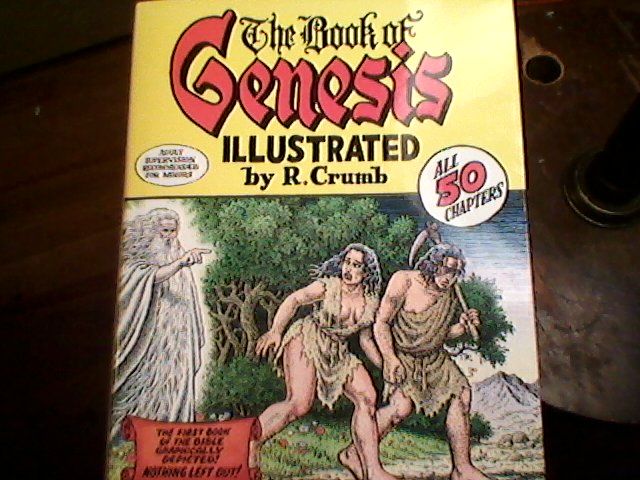
My Christmas present for myself arrived today.


"Zungguzungguguzungguzeng"
-Yellowman
pancakemix wrote:Quirk, you are a bastard. That is all.

Re: Atheist Christmas 2012
In the nordic countries we still use the old pagan word for Christmas, which in English is "Midwinter". The english and germans stopped referring to Christmas as Midwinter in the 11th century but we never did. We use the word "Jul" which is an adaptation for the pagan god of Midwinter, Jólner, who in turn is another name for the god Odin. It doesn't get anymore pagan than that lol. I like pagan traditions  .
.
.AoG for President of the World!!
I promise he will put George W. Bush to shame!
I promise he will put George W. Bush to shame!
Re: Atheist Christmas 2012
It's still used in English culture in certain contexts as Yuletide.Gillipig wrote:In the nordic countries we still use the old pagan word for Christmas, which in English is "Midwinter". The english and germans stopped referring to Christmas as Midwinter in the 11th century but we never did. We use the word "Jul" which is an adaptation for the pagan god of Midwinter, Jólner, who in turn is another name for the god Odin. It doesn't get anymore pagan than that lol. I like pagan traditions
the world is in greater peril from those who tolerate or encourage evil than from those who actually commit it- Albert Einstein
-
Baron Von PWN

- Posts: 203
- Joined: Thu Oct 01, 2009 10:05 pm
- Gender: Male
- Location: Capital region ,Canada
Re: Atheist Christmas 2012
Xmas was actually created by Christians as the Greek letter X stood for Christ. So it's literally just short hand for Christmas. No removal of chirst.Army of GOD wrote:I fucking hate non-Christians that complain about the "Christ" part of Christmas and want to change it to "Xmas". Get the f*ck over it.
Same with the people who want to take "in God we trust" off of currency. And I'm a fucking atheist too.
Also the war on Christmas is a long american tradition, of which your founding fathers would be proud.
http://www.nytimes.com/2012/12/15/opini ... stmas.html

Re: Atheist Christmas 2012
Doubtlessly related to "Juletid" which is swedish for "Christmas time".Symmetry wrote:It's still used in English culture in certain contexts as Yuletide.Gillipig wrote:In the nordic countries we still use the old pagan word for Christmas, which in English is "Midwinter". The english and germans stopped referring to Christmas as Midwinter in the 11th century but we never did. We use the word "Jul" which is an adaptation for the pagan god of Midwinter, Jólner, who in turn is another name for the god Odin. It doesn't get anymore pagan than that lol. I like pagan traditions
AoG for President of the World!!
I promise he will put George W. Bush to shame!
I promise he will put George W. Bush to shame!
Re: Atheist Christmas 2012
Absolutely- if you're interested in the topic, I can recommend:Gillipig wrote:Doubtlessly related to "Juletid" which is swedish for "Christmas time".Symmetry wrote:It's still used in English culture in certain contexts as Yuletide.Gillipig wrote:In the nordic countries we still use the old pagan word for Christmas, which in English is "Midwinter". The english and germans stopped referring to Christmas as Midwinter in the 11th century but we never did. We use the word "Jul" which is an adaptation for the pagan god of Midwinter, Jólner, who in turn is another name for the god Odin. It doesn't get anymore pagan than that lol. I like pagan traditions
http://www.amazon.co.uk/Lost-Gods-Engla ... 0500110131
If you can find a cheap copy.
the world is in greater peril from those who tolerate or encourage evil than from those who actually commit it- Albert Einstein
-
x-raider

- Posts: 248
- Joined: Tue Nov 17, 2009 5:32 am
- Location: Lost in the Complexities of the Undiscovered Universe
Re: Atheist Christmas 2012
Only A Week left:

Oops, wrong thread...
Oops, wrong thread...
-
Haggis_McMutton

- Posts: 403
- Joined: Sun Mar 26, 2006 11:32 am
- Gender: Male
Re: Atheist Christmas 2012
To help you get over this embarassing incident a donation has been made in your name to The Human Fund Money for people.x-raider wrote: Oops, wrong thread...
Highest score: 3063; Highest position: 67;
Winner of {World War II tournament, -team 2010 Skilled Diversity, [FuN||Chewy]-[XII] USA};
8-3-7
Winner of {World War II tournament, -team 2010 Skilled Diversity, [FuN||Chewy]-[XII] USA};
8-3-7
-
The Fire Knight

- Posts: 50
- Joined: Fri Jan 30, 2009 10:10 pm
- Gender: Male
Re: Atheist Christmas 2012
http://www.bib-arch.org/e-features/christmas.aspSymmetry wrote: This thread, however, is about Christmas- a pagan festival awkwardly co-opted by some branches of Christianity, and rejected by others,
It's kind of awesome.
For me, it's all about food recently. Specifically getting people together to share a meal. That ain't the Christian part, of course, which focuses on gift giving (the Magi) or celebration, or even the ritualisation of a year from birth in darkness.
Re: Atheist Christmas 2012
There really should be a Pagan Christmas thread.The Fire Knight wrote:http://www.bib-arch.org/e-features/christmas.aspSymmetry wrote: This thread, however, is about Christmas- a pagan festival awkwardly co-opted by some branches of Christianity, and rejected by others,
It's kind of awesome.
For me, it's all about food recently. Specifically getting people together to share a meal. That ain't the Christian part, of course, which focuses on gift giving (the Magi) or celebration, or even the ritualisation of a year from birth in darkness.
the world is in greater peril from those who tolerate or encourage evil than from those who actually commit it- Albert Einstein
-
macbone

- Posts: 6217
- Joined: Wed Jun 03, 2009 7:12 pm
- Gender: Male
- Location: Running from a cliff racer
- Contact:
Re: Atheist Christmas 2012
Ach, Symmetry, but man, you're wrong about food not being a part of the religious nature of the holiday. Of course food isn't exclusive to religious observation; on the contrary, as you correctly point out, it's mainly divorced from the religious celebration, just as the gift-giving is now more materialistically based than religious, although churches do celebrate with Christmas dinners.Symmetry wrote:For me, it's all about food recently. Specifically getting people together to share a meal. That ain't the Christian part, of course, which focuses on gift giving (the Magi) or celebration, or even the ritualisation of a year from birth in darkness.
But the fellowship meal is a very important part of Christianity, from Christ's last supper to the behavior of the early Church in Acts 2:42-47 (breaking bread and eating together) to the marriage feast of the Lamb in Revelation. The most important sacrament in Christianity is the bread and the wine. Wherever people have gathered, these things have been important - shelter from the elements and food and drink to feed the spirit and warm the heart - and you'll find them woven throughout Christianity and the religious festivals, particularly in Christmas.
I know A Christmas Carol isn't considered part of the holy reading at Christmas (at least at my church - I think we could do much, much worse, personally), but good food and good drink is hugely important in that tale (the turkey as big as the boy in the street, the plum pudding, Scrooge's nephew's feast, the Ghost of Christmas Present's cornucopia, Scrooge and Bob Cratchitt sharing a bowl of smoking bishop as a symbol of Scrooge's new life), and you'll find no better literary description of a person repentant and born again than Ebeneezer Scrooge.

They know what's up.
I'll leave you with this quote from Dickens: “Remember!--It is Christianity to do good always--even to those who do evil to us. It is Christianity to love our neighbours as ourself, and to do to all men as we would have them do to us. It is Christianity to be gentle, merciful and forgiving, and to keep those qualities quiet in our own hearts, and never make a boast of them or of our prayers or of our love of God, but always to show that we love Him by humbly trying to do right in everything. If we do this, and remember the life and lessons of Our Lord Jesus Christ, and try to act up to them, we may confidently hope that God will forgive us our sins and mistakes, and enable us to live and die in peace.”
I'm out. Peace, everybody, and Merry Christmas! =)

Re: Atheist Christmas 2012
I'm not sure if you're saying I'm right or wrong about the food, but I'm pretty sure it isn't exclusively Christian to get together and share a meal. I see very little humility in feasting.macbone wrote:Ach, Symmetry, but man, you're wrong about food not being a part of the religious nature of the holiday. Of course food isn't exclusive to religious observation; on the contrary, as you correctly point out, it's mainly divorced from the religious celebration, just as the gift-giving is now more materialistically based than religious, although churches do celebrate with Christmas dinners.Symmetry wrote:For me, it's all about food recently. Specifically getting people together to share a meal. That ain't the Christian part, of course, which focuses on gift giving (the Magi) or celebration, or even the ritualisation of a year from birth in darkness.
But the fellowship meal is a very important part of Christianity, from Christ's last supper to the behavior of the early Church in Acts 2:42-47 (breaking bread and eating together) to the marriage feast of the Lamb in Revelation. The most important sacrament in Christianity is the bread and the wine. Wherever people have gathered, these things have been important - shelter from the elements and food and drink to feed the spirit and warm the heart - and you'll find them woven throughout Christianity and the religious festivals, particularly in Christmas.
I know A Christmas Carol isn't considered part of the holy reading at Christmas (at least at my church - I think we could do much, much worse, personally), but good food and good drink is hugely important in that tale (the turkey as big as the boy in the street, the plum pudding, Scrooge's nephew's feast, the Ghost of Christmas Present's cornucopia, Scrooge and Bob Cratchitt sharing a bowl of smoking bishop as a symbol of Scrooge's new life), and you'll find no better literary description of a person repentant and born again than Ebeneezer Scrooge.
They know what's up.
I'll leave you with this quote from Dickens: “Remember!--It is Christianity to do good always--even to those who do evil to us. It is Christianity to love our neighbours as ourself, and to do to all men as we would have them do to us. It is Christianity to be gentle, merciful and forgiving, and to keep those qualities quiet in our own hearts, and never make a boast of them or of our prayers or of our love of God, but always to show that we love Him by humbly trying to do right in everything. If we do this, and remember the life and lessons of Our Lord Jesus Christ, and try to act up to them, we may confidently hope that God will forgive us our sins and mistakes, and enable us to live and die in peace.”
I'm out. Peace, everybody, and Merry Christmas! =)
Still, good post, and it made me hungry.
the world is in greater peril from those who tolerate or encourage evil than from those who actually commit it- Albert Einstein
-
macbone
- Posts: 6217
- Joined: Wed Jun 03, 2009 7:12 pm
- Gender: Male
- Location: Running from a cliff racer
- Contact:
Re: Atheist Christmas 2012
I agree with you that the Christmas meal was appropriated from pagans by Christians, but the idea of coming together for food in fellowship and hospitality is an important part of Christianity. Food and drink are good things. =)
Here's another example of what I'm talking about, "Good King Wenceslas." The final verse, sharing food with others, is a key part of Christmas, and that verse contains the most obvious link between Wenceslas and Christianity:
Here's another example of what I'm talking about, "Good King Wenceslas." The final verse, sharing food with others, is a key part of Christmas, and that verse contains the most obvious link between Wenceslas and Christianity:
Re: Atheist Christmas 2012
i think sharing a meal is pretty universal, pagan, Christian, or whatever. Sharing a Christmas meal is not about being humble though. The best Christian virtue it exemplifies is hospitality, which is also something sadly lacking if it's ritualised to one day a year,macbone wrote:I agree with you that the Christmas meal was appropriated from pagans by Christians, but the idea of coming together for food in fellowship and hospitality is an important part of Christianity. Food and drink are good things. =)
Here's another example of what I'm talking about, "Good King Wenceslas." The final verse, sharing food with others, is a key part of Christmas, and that verse contains the most obvious link between Wenceslas and Christianity:
the world is in greater peril from those who tolerate or encourage evil than from those who actually commit it- Albert Einstein
Re: Atheist Christmas 2012
And it's limited to family and friends. It's not like people invite strangers to sit with them at the table. So it's not really hospitality at all.Symmetry wrote:i think sharing a meal is pretty universal, pagan, Christian, or whatever. Sharing a Christmas meal is not about being humble though. The best Christian virtue it exemplifies is hospitality, which is also something sadly lacking if it's ritualised to one day a year,macbone wrote:I agree with you that the Christmas meal was appropriated from pagans by Christians, but the idea of coming together for food in fellowship and hospitality is an important part of Christianity. Food and drink are good things. =)
Here's another example of what I'm talking about, "Good King Wenceslas." The final verse, sharing food with others, is a key part of Christmas, and that verse contains the most obvious link between Wenceslas and Christianity:
AoG for President of the World!!
I promise he will put George W. Bush to shame!
I promise he will put George W. Bush to shame!